

There is a question making its way through planning committees, brand strategy decks, and post-event debriefs right now. Is a photo booth actually worth the line item?

It is a fair question. The novelty of the traditional photo booth peaked years ago. The props, the prints, the retractable backdrop. If that is what you are picturing, your skepticism makes sense.
But that is not what we are talking about. And if you are still asking whether a photo booth matters in 2026, you are asking the wrong question.
The real question is: what does your activation produce?
The planners and brands winning right now are not booking equipment. They are investing in experiences that generate content, capture data, and extend reach well past the last hour of the event. Here is what that shift actually looks like.
The Debate Is Not About the Equipment
When event professionals say they are skeptical of photo booths, they are almost always describing the same thing: the commodity version. The drop-and-go setup
tucked in a corner with a generic template and a clip art logo. The vendor who sends a driver and never shows up again.
That skepticism is completely valid. A commodity activation produces commodity results. A stack of prints nobody keeps. A folder of unbranded files that never touch your content strategy.
A well-executed photo and video activation is a different animal entirely.
The booth was never the point. What it produces, content, data, reach, memory, always was.
When there is real strategy behind it, a photo activation generates branded digital content attendees share the moment they get it, social impressions that push your event footprint well past the four walls it happened in, engagement data tied to specific moments, and a visual record of your brand doing exactly what it is supposed to do.
That is not a photo booth. That is a media engine built around your event.
What Attendees Actually Want in 2026
Attendee behavior has changed. At any premium event, whether that is a corporate conference, a brand activation, or a nonprofit gala, the expectation is that the experience will be worth sharing. Not because people are performative. Because sharing is how they remember.
That puts a specific demand on every planner. The activation you provide has to do two things at once: create a real moment in the room and produce a digital asset the attendee actually wants to post.
The events that consistently get this right have a few things in common.
The experience feels branded without feeling like an ad. Attendees leave with something that looks like content they chose to create, not a logo placement they tolerated.
The output is instant. Text-to-phone delivery, branded digital galleries, QR share flows. The faster the content gets to the attendee, the higher the organic reach.
The activation is designed, not just deployed. There is creative direction behind it that connects to the event theme, the brand identity, and the specific audience in the room.
When those things come together, attendees stop being participants and start being your distribution channel.
What Data-Driven Actually Means Here
The phrase gets used a lot, so it is worth being specific.
A data-driven photo and video activation captures more than images. Every point of contact, the share flow, the digital gallery, the text delivery, creates a data layer. It tells you who engaged, when they engaged, and what content they chose to share.
For corporate event planners and brand managers, that translates into metrics that mean something in a debrief.
Social amplification tells you how many attendees shared branded content and what the actual reach of those shares was. That is earned media, quantified, tied directly to your event investment.
Engagement depth tells you whether people came back. High return rates signal that the experience resonated rather than just registered.
Content volume tells you how many branded assets were created and delivered. At large-scale events, that number moves fast. Thousands of pieces of shareable content in a single evening is not unusual.
These are not soft metrics. They are the evidence that your activation generated value that outlasted the event itself.
The Numbers That Prove It
Theory is useful. Real results are better.
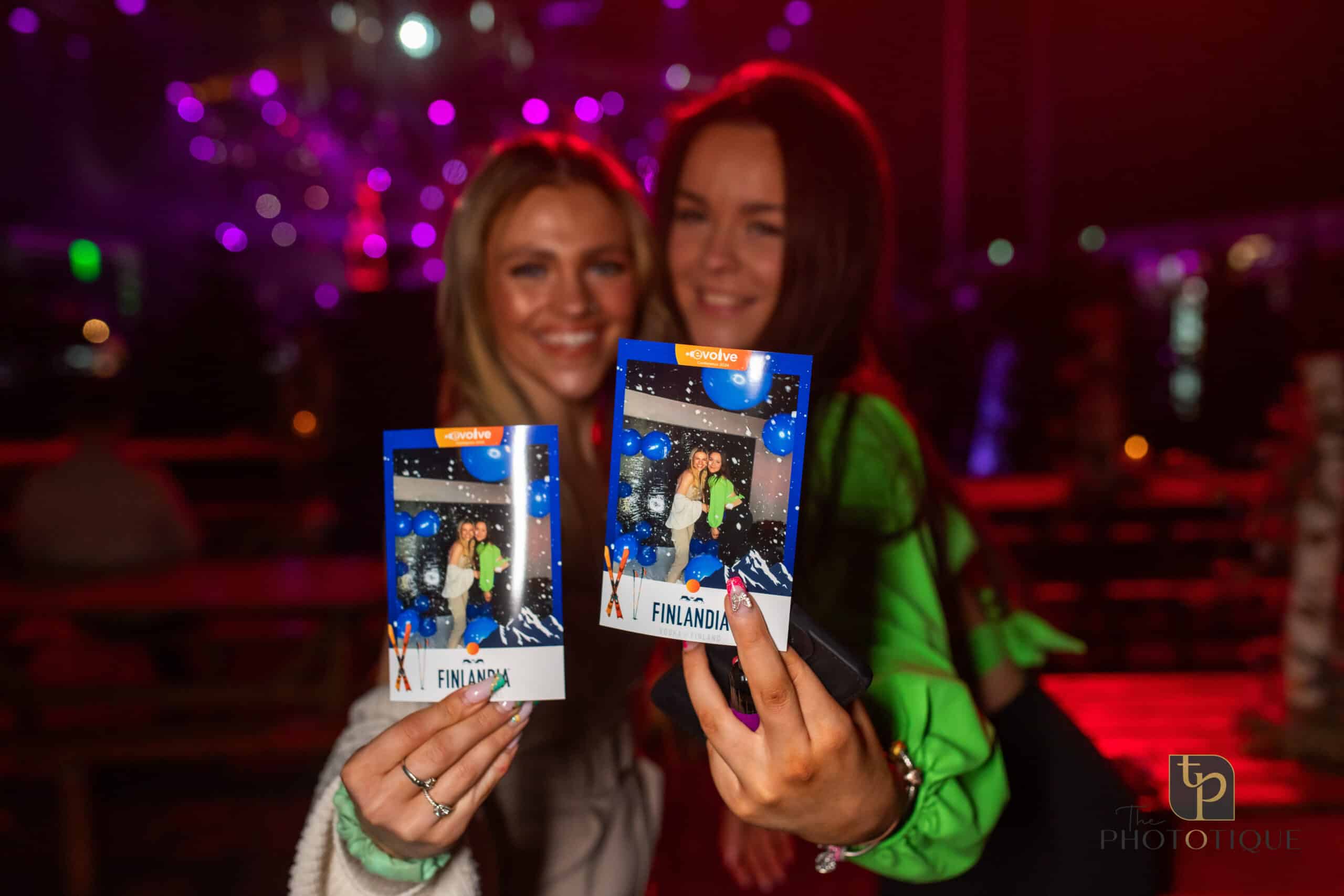
At the Walter E. Washington Convention Center, one of the largest event venues in Washington DC, The Phototique executed a photo and video activation for a major corporate conference. Here is what that produced.

Those 3.2 million impressions were not paid for. They came from attendees sharing branded content in real time, pushing the event into feeds and conversations that had nothing to do with who was on the guest list.
The event ended. The content kept moving.
This is not a one-time result. The Phototique has produced outcomes like this across events including the Amazon Veteran Summit, the Delta Sigma Theta 57th National Convention with 36,000 attendees, the PCMA Sneaker Ball, and activations at the Spy Museum and National Building Museum. Scale and strategy, applied consistently, produce consistent results.

What This Means for Your Brand
If you plan corporate events in the DC or broader DMV market, here is what this looks like in practice.
A data-driven photo activation is a line item that justifies itself. When you walk into a post-event debrief with social amplification numbers, content volume data, and documented engagement rates, the conversation changes. It stops being about what the activation cost and starts being about what it generated.
It also changes the vendor relationship. You are not booking equipment. You are working with a strategic partner who understands your event objectives, builds an experience around your brand, and delivers results you can measure.
We sell experience, not equipment. That difference shows up in every metric that matters after the event ends.
Events that treat the photo and video activation as a content and engagement strategy are consistently outperforming those that treat it as a line item to be minimized. That gap is only growing.
So Does It Still Matter?
Yes. But only if you are doing it right.
A commodity photo booth in 2026 is a branded pen. It fills space, gets used once, and nobody thinks about it again.
A strategically designed photo and video activation is something else. It is a content engine, a social amplification tool, a lead engagement touchpoint, and a guest experience running at the same time, at scale, for the duration of your event.
The planners and brand managers who get this are not asking whether a photo activation is worth the investment. They are asking how to get the most out of the one they book.
That is the right question. And it has a very good answer.
Ready to Build an Experience That Produces?
The Phototique designs photo and video activations for corporate events, brand activations, conferences, and trade shows across DC, Maryland, and Virginia. We specialize in large-scale, data-driven experiences that generate content, amplify reach, and deliver measurable ROI.
If you are planning a corporate event in the DMV and want to talk through what a strategic activation looks like for your specific program, we would welcome the conversation.
That’s the standard your clients, sponsors, and stakeholders are already holding you to. The activation you bring into your event either helps you meet it, or it doesn’t.