There is a moment every event planner has lived. The room looks exactly the way you imagined it — the lighting is perfect, the programming is tight, the catering is flawless. And the guests are there. They are standing in the space, holding their drinks, nodding at the right moments. But they are not in the experience. They are observing it from a comfortable distance, scrolling between moments, waiting for the next thing to happen to them.
That gap — between attendance and engagement, between being in the room and being part of the experience — is the central problem of modern event design. And it is not solved by better programming, a more dramatic venue, or a larger production budget. It is solved by giving guests something to do that makes them feel like they belong to the event, not just beside it.
That is what experiential activation is actually for. Not a photo novelty in the corner. Not a line item checked off the vendor list. A deliberate engagement tool — one designed to pull guests off the sidelines and into the story the event is trying to tell.
Below are four activations that the top-tier corporate events, brand experiences, and luxury gatherings in the DMV market are using right now to close that gap. Each one operates differently. Each one serves a different kind of event. And together, they represent a new standard for what the photo and video layer at a high-end event can actually do.
The best events are not remembered because of what guests saw. They are remembered because of what guests did — and how they felt doing it
01. The Mosaic Activation: Turning a Crowd Into a Collective Brand Asset
Of all the activations available to corporate planners today, the mosaic is the one that does the most work with the least fanfare. It is not the loudest thing in the room. It is often not even the most visually dramatic — until the moment it is revealed. And when that reveal happens, it changes something in the room. People stop talking. They lean in. They look for themselves.
That is what a well-executed mosaic does. It takes a crowd and turns it into something.
What It Is
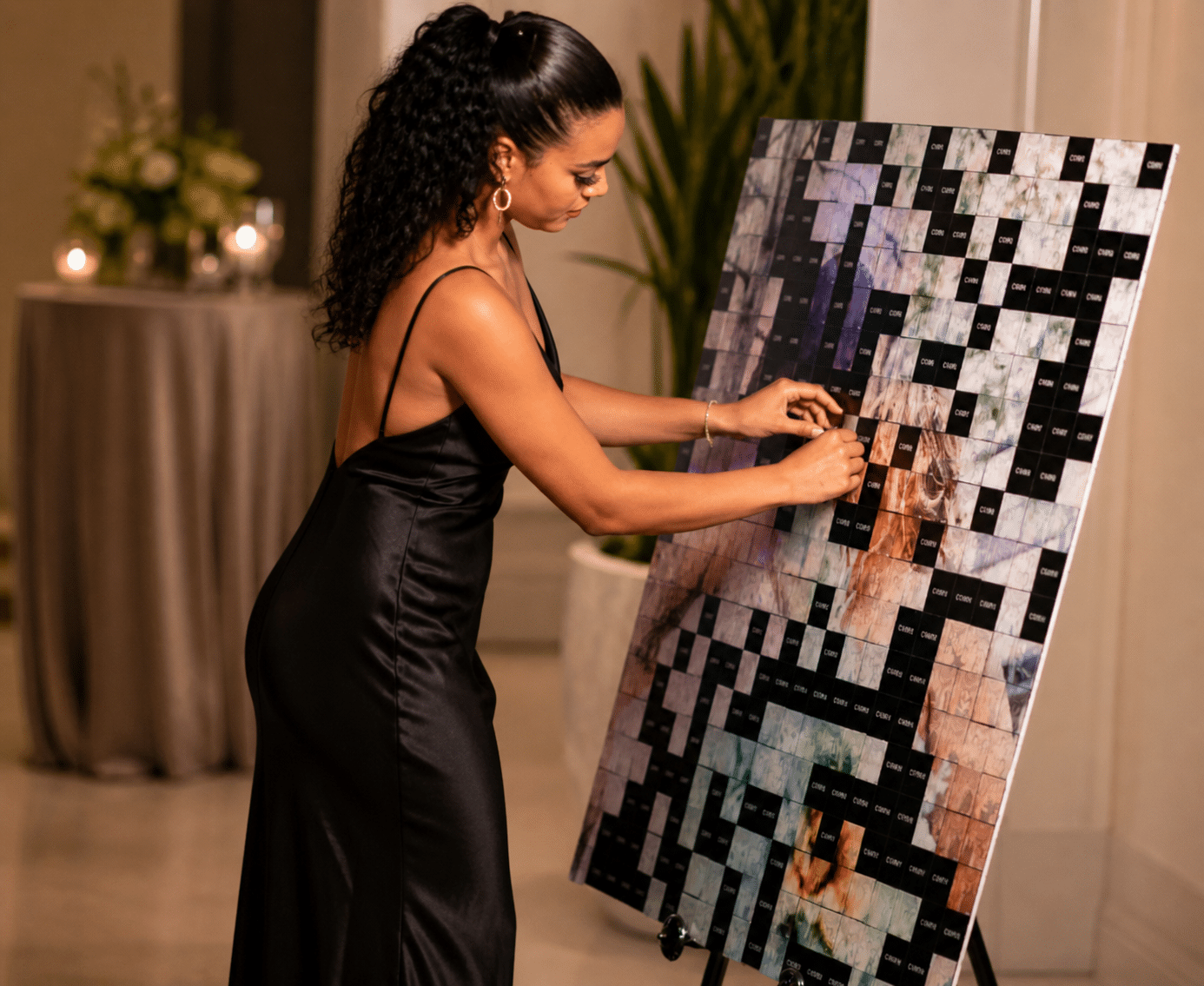
A mosaic activation captures individual or group photos throughout the event — typically via a dedicated experience station — and assembles them in real time into a large-scale composite image. The final mosaic might be your brand logo, a campaign graphic, a company milestone design, or any high-resolution visual selected in advance. Every guest who participates becomes a tile in that larger image.
The technology has evolved significantly. Modern mosaic systems can update and display the composite image in near real time as new photos are added, creating a living installation that grows across the arc of the event. The reveal at the end — when the full image becomes clear — is a genuine event moment in its own right.
Why It Works at Scale
The mosaic activation is uniquely suited to large-format corporate events: conventions, conferences, trade shows, national meetings, multi-day brand activations. The reason is structural. At events with hundreds or thousands of attendees, individual activations can feel disconnected from the larger experience — fun in isolation, but not part of the event’s story.
The mosaic is the opposite. Every participation adds to something shared. A guest who gets their photo taken at 9am on day one is still part of the final image alongside the guest who participates on day three. The activation creates a thread of connection across the entire event footprint.
At the Walter E. Washington Convention Center, a single multi-day mosaic and multi-zone activation produced over 50,000 photos, served more than 20,000 attendees, and generated over 3.2 million organic impressions from shared content. The mosaic was not the only activation at that event — but it was the one guests talked about afterward.
The Content Afterlife
This is the point most planners underestimate. The mosaic does not end when the event does. The final composite image is a genuine piece of branded content — custom-designed, produced at the event, and owned entirely by the brand. It lives in post-event recaps, in internal communications celebrating the gathering, in social media campaign assets, on event microsite galleries, and sometimes in annual report creative.
One activation. Months of content utility. That changes the cost-per-asset calculation entirely.
Who Should Consider It
- Corporate conferences and conventions with 300+ attendees
- Brand activations where community and collective identity are core themes
- Milestone events — anniversaries, launches, national gatherings — where the group itself is the story
- Trade show footprints where a large-format visual anchor draws traffic and dwell time
A mosaic does not just capture the moment. It becomes the moment — a visual artifact that every attendee helped create, and that no one else can replicate.
02. The Lenticular Experience: The Luxury Takeaway That Stops Time
Most guests have experienced a photo activation. Fewer have experienced one that hands them something that moves.
That is the lenticular experience — and it is one of the most effective differentiators in luxury event production right now, precisely because so few planners have encountered it and so many guests have never held one.
The Short Version for the Uninitiated
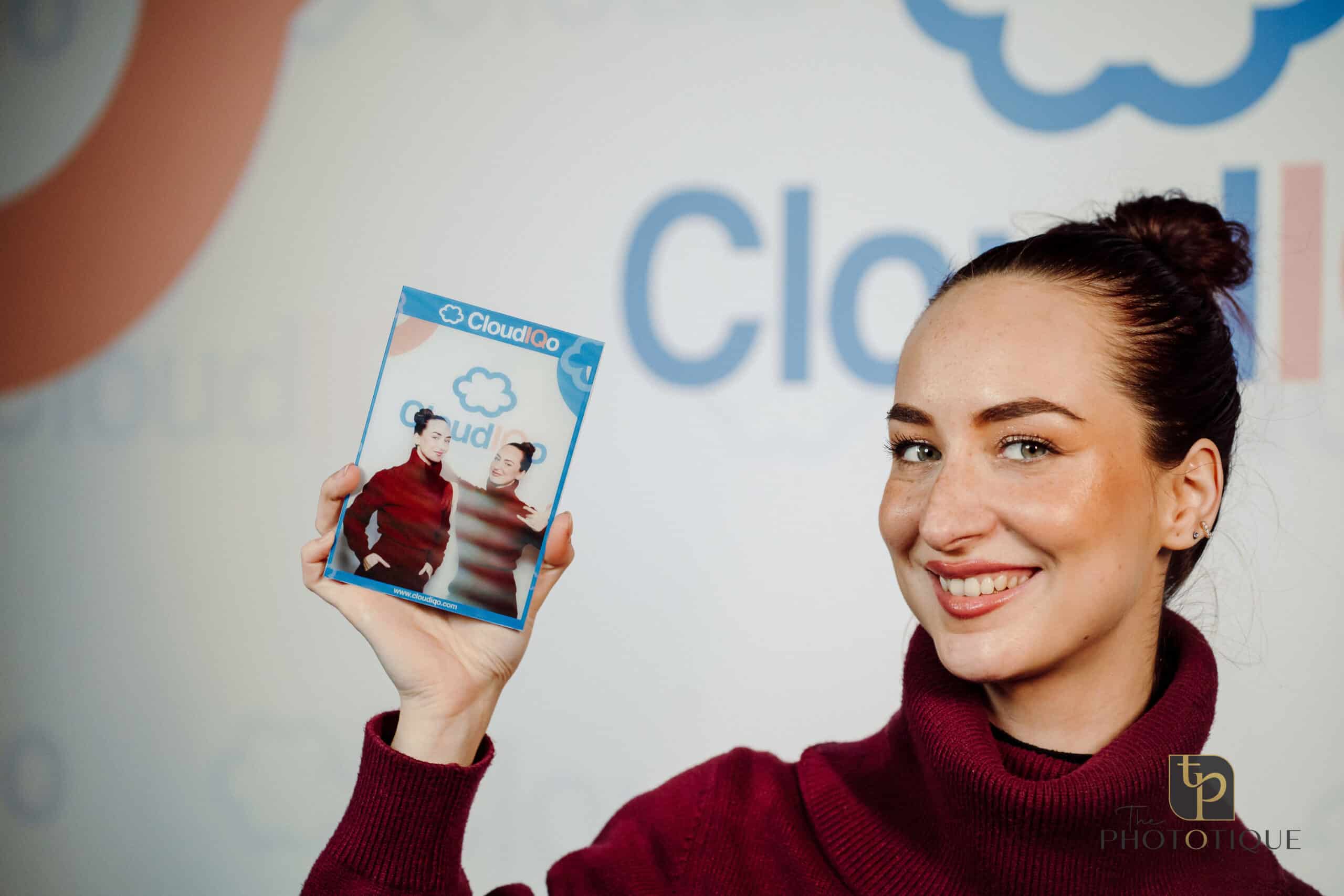
Lenticular printing uses a ridged lens sheet layered over multiple interlaced images. When you tilt the print, the image shifts — revealing a different photo, a different message, a before-and-after, or a motion sequence depending on how the experience is designed. The effect is immediate and tactile. Guests tilt the print, watch it change, and almost universally show it to the person standing next to them.
That moment — the involuntary share — is exactly what a luxury keepsake should produce.
Why It Belongs at High-End Events
The standard photo print has become background noise. Guests receive them, glance at them, and occasionally lose them in a bag. The lenticular print does not allow that. It demands to be looked at again. It rewards curiosity. It goes home on a desk or a refrigerator or a pinned corkboard — not in a forgotten pile.
For luxury brand activations, galas, and high-profile corporate events, the lenticular print signals something important: that this event was designed with intention. That the brand behind it invests in experiences that are genuinely different. That the keepsake in a guest’s hand is not an afterthought — it is a statement.
Creative Applications
The lenticular format opens creative territory that flat prints cannot access:
- Before and after: the guest’s photo paired with a branded campaign image, shifting between the two as the print tilts
- Dual reveal: two photos from different moments of the event, creating a personal narrative in a single print
- Brand message integration: a personalized photo on one angle, a brand tagline or event theme revealed on the tilt
- Motion sequence: a series of frames that create a simple animation — particularly effective for product launches and campaign reveals
The Competitive Moat
In the DMV corporate event market, lenticular printing at the level required for luxury brand activations is not widely available. That scarcity matters. When a guest shows their lenticular print to a colleague who attended a different event, the comparison is immediate. It is not ‘we had a photo booth too’ — it is ‘I have never seen anything like this.’
That is the kind of differentiation that makes planners look exceptional, and brands look innovative.
A flat print gets glanced at. A lenticular print gets tilted, studied, and shown to everyone in the room. That is not a novelty — that is earned attention.
03. The High-Angle Setup: The Perspective That Produces Unmistakable Content
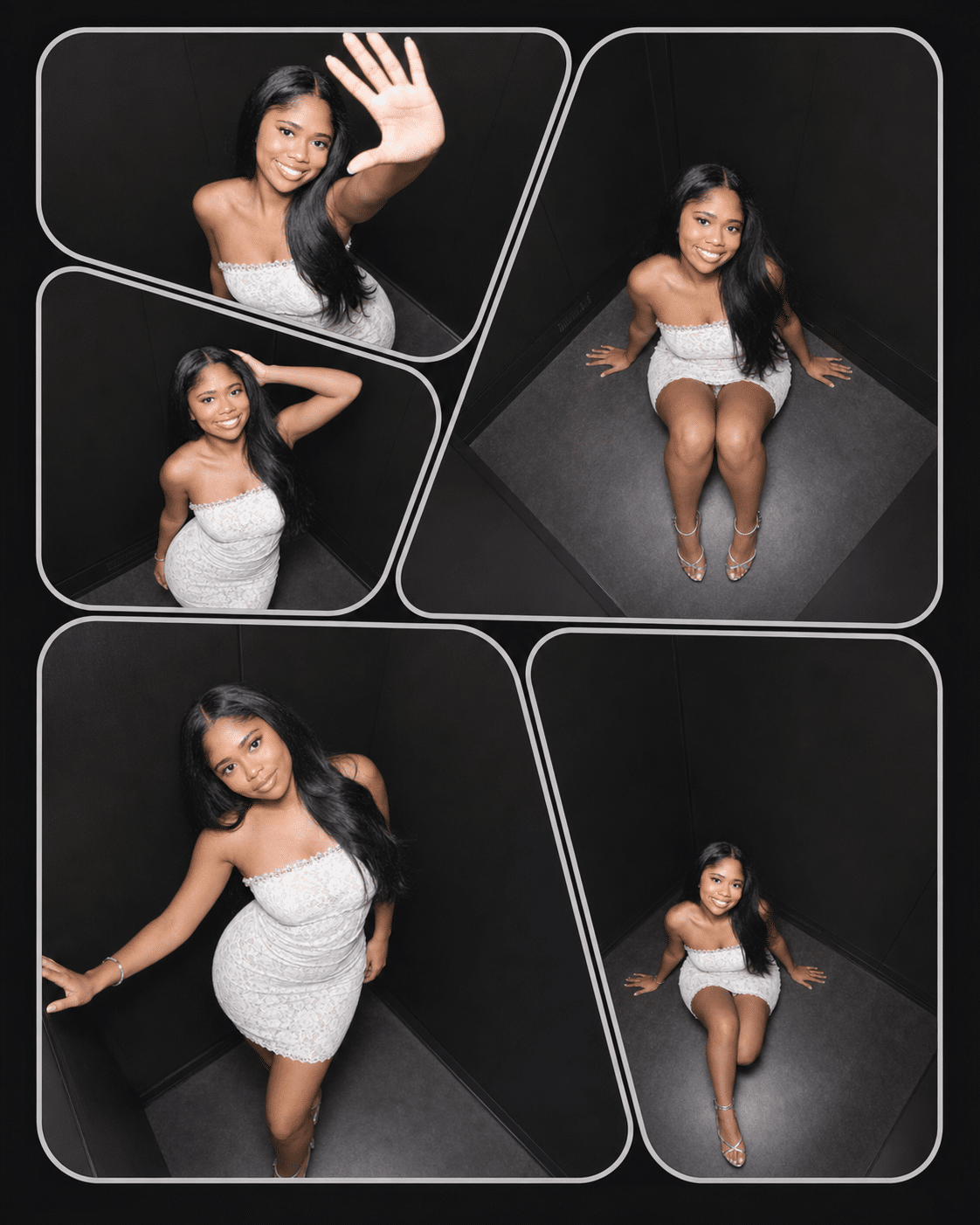
Every guest at your event is a content creator. They have a phone in their pocket and they know how to use it. The question is not whether content will be created at your event — it will be. The question is what the best content looks like, who produces it, and whether your brand is in the frame.
The high-angle photo experience answers all three questions.
What It Is
A high-angle or overhead setup positions the camera significantly above the subjects — anywhere from several feet to dramatically elevated — to capture a bird’s-eye perspective of guests, groups, or brand elements arranged below. The result is an instantly distinctive visual register: guests arranged in patterns, human formations spelling a hashtag or logo, styled flat-lay compositions with props and signage, or wide-angle group captures that communicate event scale in a way no eye-level phone shot can.
It looks produced because it is. And in a feed full of eye-level selfies, that distinction is the whole point.
Why the Aerial Perspective Performs
Social platforms have trained audiences to pause at visual surprise. The overhead shot creates that pause — it is a perspective people do not encounter in their daily photo scroll, which means it registers differently than content captured at standing height. It feels elevated. It feels considered. And elevation, in visual terms, reads as quality.
For corporate event planners building post-event content packages, the high-angle setup provides a visual variety that no other single activation can match. The same event can yield intimate group shots from eye level and dramatic aerial compositions from above — and the contrast between the two makes both stronger.
What It Produces
- Brand formation shots: guests or brand elements arranged to spell a campaign hashtag, logo, or milestone number — captured from above for a one-of-a-kind campaign asset
- Scale storytelling: an overhead perspective communicates crowd size and energy in a way ground-level photography cannot — essential for post-event recaps and sponsorship reports
- Flat-lay activations: for consumer brand events, styled product integration alongside guests creates imagery that translates directly to marketing creative
- Event recap anchors: high-angle imagery provides the hero shot that leads post-event social posts, email campaigns, and press coverage
The Share Rate Advantage
Because high-angle imagery is visually distinctive, it travels faster and further in social environments than standard eye-level photography. When guests receive their overhead shots and share them, those images stand out in feeds — not because of a filter or clever caption, but because of the perspective itself. That organic differentiation is earned media. It cannot be purchased. It is produced by making the shot worth sharing in the first place.
In a feed full of eye-level moments, one aerial shot stops the scroll. That is not luck — it is geometry.
04. The AI Studio: Where Guests Become the Campaign
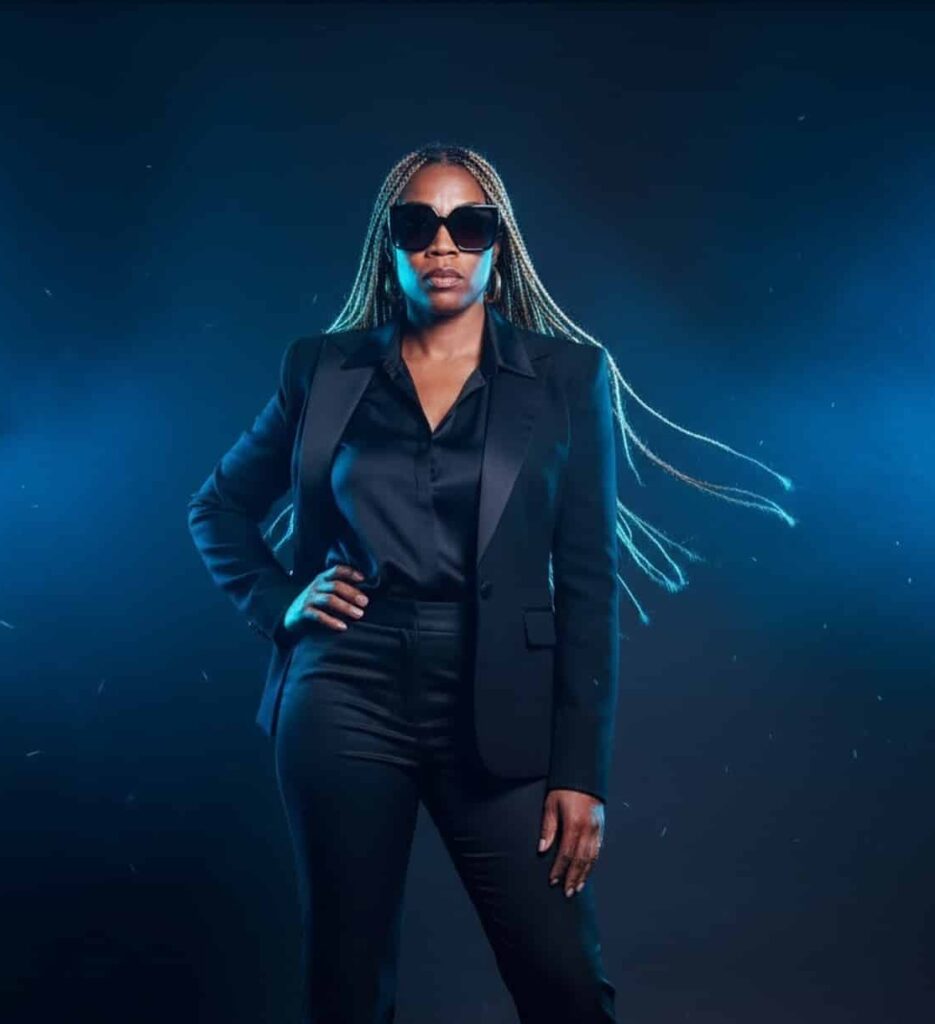
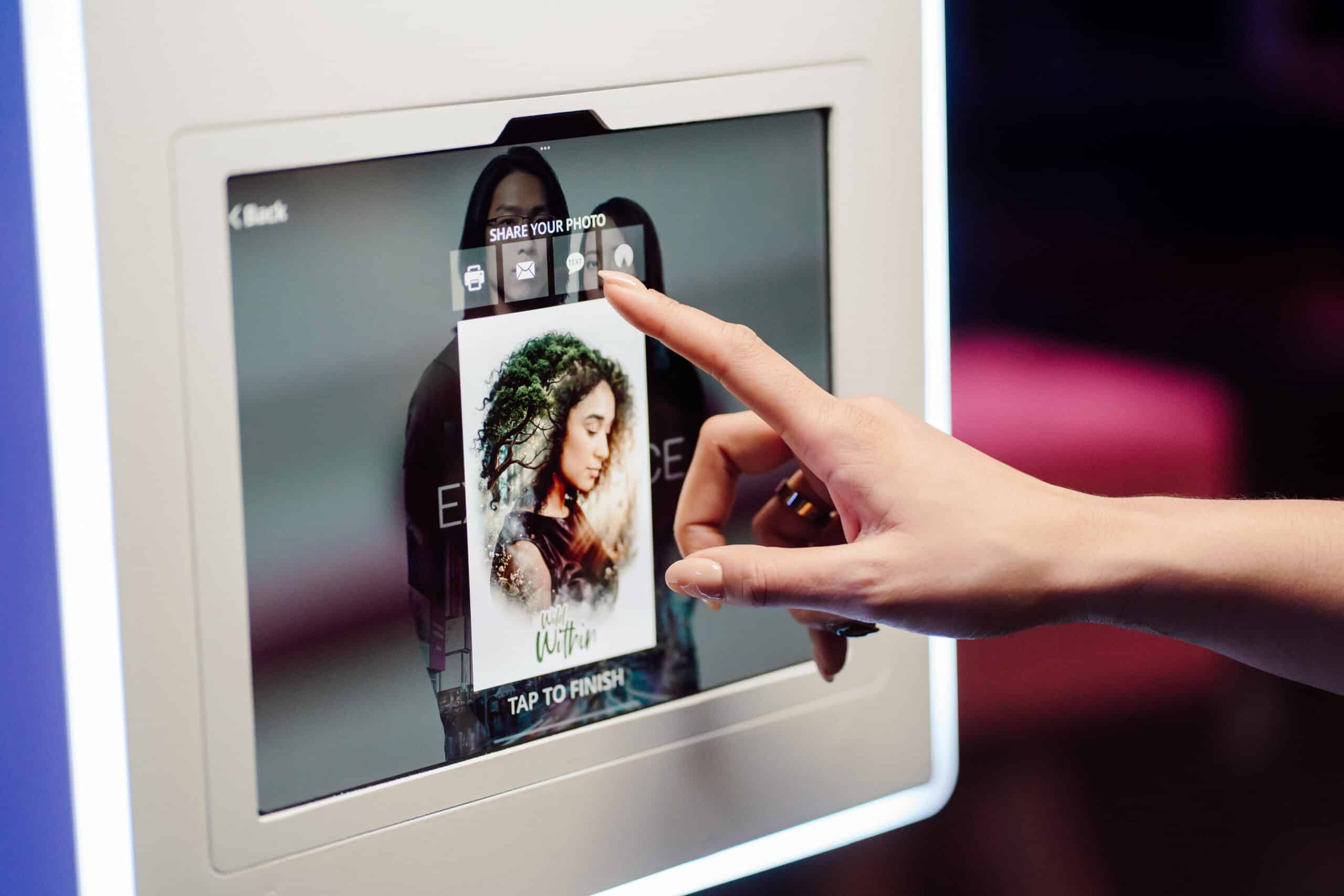
Every other activation on this list produces a photo of the guest at the event. The AI Studio does something different. It makes the guest the creative subject — and puts them inside an image that could not exist any other way.
This is the activation that will define the next three years of luxury event production. And the brands that integrate it now are not just offering something novel — they are demonstrating something about their relationship with innovation.
What It Is
The AI Studio activation uses on-site portrait capture paired with trained generative AI models to transform a guest’s photo into a branded campaign image. Guests step in, get their photo taken by a skilled operator, and within moments receive a version of themselves that has been styled, placed, and composed into a visual that aligns with the event’s creative direction.
The applications are wide and growing:
- Branded campaign integration: the guest appears inside a pre-designed campaign world — a product launch visual, a brand environment, a themed graphic — as if they had been professionally shot for it
- On-site AI headshots: high-quality professional portrait output delivered in minutes, with consistent lighting and brand-appropriate styling — particularly valuable at conferences, summits, and professional gatherings
- Themed transformation: the guest is rendered in the visual language of the event — a gala theme, a product aesthetic, a campaign color story — creating a personalized artifact tied directly to the brand experience
Why This Is Not a Gimmick
The AI photo booth market has produced a lot of fast, low-quality output — apps that apply filters and call it AI. That is not what a properly executed AI Studio activation is. At the luxury level, the output is indistinguishable from high-production creative. The styling is intentional. The brand integration is precise. The delivery is fast enough to feel magical and polished enough to feel professional.
Guests do not experience it as a tech demo. They experience it as a moment where the event did something for them that they could not have done on their own. That is the bar — and it is the bar that separates a commodity AI experience from a genuine brand asset.
The Corporate Event Case
For corporate event planners, the AI Studio has a specific strategic value that other activations do not: it produces content that guests actually use after the event. A professionally rendered AI headshot gets uploaded to LinkedIn. A branded campaign image gets shared as a post. A themed creative piece gets saved and revisited.
Every one of those post-event uses is an organic brand impression. Every time a guest shares their AI Studio output with their network, the event reaches an audience that never attended. No other on-site activation produces that kind of post-event distribution at scale.
The 2026 Positioning Advantage
The brands and planners who integrate AI Studio activations into their events now are operating ahead of the market. Within two years, this will be an expected offering at tier-one corporate events. The brands that were early will have established creative frameworks, trained audiences, and refined workflows. Those who wait will be catching up.
In event production, first-mover advantage in new formats is real. The lenticular experience was novel five years ago. AI Studio is novel now. That window does not stay open indefinitely.
Every other activation gives guests a photo from the event. The AI Studio gives guests a photo of who they are inside the brand’s world. That is a fundamentally different thing.
Building the Experience Layer: How Strategic Planners Choose
The four activations above are not interchangeable. Each one serves a different event architecture, a different guest profile, and a different content goal. Choosing the right one — or the right combination — is where the real strategic work happens.
Match the Activation to the Event’s Core Purpose
The first question is not ‘what activation do I want?’ It is ‘what does this event need to accomplish?’ A national convention where the collective experience is the entire point needs a Mosaic. A luxury product launch where the brand wants guests to feel elevated and innovative needs an AI Studio. A gala where the keepsake is as important as the moment needs Lenticular. An awards show or milestone celebration where the hero content matters needs a High-Angle setup.
The activation should serve the event’s architecture. When it does, guests do not experience it as a separate thing — they experience it as the event.
Think About the Guest Journey
Where in the event flow does the activation live? Placement is strategy. An activation at the entrance seeds social sharing early and sets the tone for the evening. One at the peak of the program creates a high-energy focal point. One near the exit gives guests a final branded touchpoint they carry home.
Experienced experiential partners do not just deliver equipment to a coordinate on a floor plan. They consult on placement, guest flow, and how the activation integrates with the programming arc of the evening.
Design for the Content That Comes After
The most strategically valuable activations are the ones that keep producing after the event ends. Branded photo delivery. Mosaic reveal assets. AI Studio outputs shared across professional networks. Lenticular prints that end up in photos people post months later.
When the activation is designed with post-event content strategy in mind from the beginning, the return on the investment multiplies significantly. The event does not end when the guests go home — it ends when the last piece of content from it stops circulating. Design accordingly.
What to Look for in a Luxury Event Activation Partner
Not all experiential companies are built the same. The gap between a commodity operator and a genuine luxury experiential partner is wide — and it shows up in the details that guests feel even when they cannot name them.
Design-First Thinking
A luxury partner leads with design, not equipment. They ask about your brand guidelines, your event aesthetic, your guest profile, and your content goals before they discuss logistics. The activation should feel like it was designed for your event — not rented from a catalog and dropped into the room.
Operational Excellence
Premium events have zero tolerance for technical failure, awkward resets, or guest-facing friction. The best partners operate with redundant systems, experienced on-site teams, and the professionalism to be invisible when everything is running smoothly — and decisive when it is not.
Content Strategy Integration
Your activation partner should be thinking about your content before, during, and after the event. Branded overlays. Photo delivery workflows integrated with your post-event communications. Gallery pages. Mosaic reveals timed to your social calendar. The activation should arrive with a content strategy, not just a setup.
Genuine Partnership
The best partners are not order-takers. They bring recommendations, flag issues with placement or flow before they become problems, push back when a choice does not serve the event’s goals, and show up with the same investment in the outcome that you do. That relationship is what separates a vendor from a partner — and it is what the best events are built on.
The Standard Has Changed. The Question Is Whether Your Events Have.
The events that will define this era — the ones guests remember, the ones that generate content that circulates for months, the ones that make brands look visionary and planners look exceptional — are not the ones with the largest budgets. They are the ones where someone made a deliberate decision to replace passive programming with immersive experience design.
A Mosaic that turns 2,000 attendees into a single piece of branded art. A Lenticular print that goes home on a guest’s desk and stays there. A High-Angle setup that produces the hero shot every recap campaign needs. An AI Studio that gives guests a version of themselves inside the brand’s world.
These are not luxury add-ons. They are the new standard for events that take guest engagement seriously — and the brands and planners who understand that are the ones pulling ahead.
If you are planning a corporate event, conference, brand activation, or signature experience in the Washington DC, Maryland, or Virginia market and you are ready to move from passive to immersive, The Phototique is the experiential partner built for that conversation. We do not do off-the-shelf. We design activations that serve your event’s goals, your brand’s identity, and your guests’ experience — then we execute them at a level that shows.
Ready to design something worth remembering?
Connect with The Phototique to begin the conversation.